Guide: sciatica basics
What Is Sciatica? Causes, How Long It Lasts and When to Get Help
Sciatica is pain, tingling, numbness or weakness that runs along the sciatic nerve, from the low back down one leg. It is a symptom, usually of a disc or a narrowed spinal canal pressing on a nerve root. Most cases ease within a few weeks. Guidelines start with staying active and heat, and some signs need emergency care.
Written by the SciatiEase label deskUpdated
Start here01
What is sciatica?
Sciatica is a set of symptoms caused by an irritated or squeezed sciatic nerve root. It is not a disease on its own (MedlinePlus, Sciatica). People feel pain, burning, tingling, numbness or weakness from the low back or buttock down one leg.
Doctors class it as neuropathic pain, meaning pain that comes from a nerve rather than a muscle or joint (NINDS, Pain). That is why it can feel like an electric shock, not a pulled back.
- 1. Low back
Nerve roots L4 to S3 leave the spine. The usual cause is a bulging disc or a narrowed space at this level.
- 2. Buttock
The roots join into the sciatic nerve, the thickest nerve in the body.
- 3. Back of the thigh
Pain, tingling or numbness can run along this path, usually on one side.
- 4. Below the knee
The nerve splits; symptoms can reach the calf, foot and toes.
A drawing, not an anatomy chart. Sources: MedlinePlus (MedlinePlus, Sciatica) and the NHS (NHS, Sciatica).
Causes02
What causes sciatica?
A herniated or bulging disc in the lower spine is the most common cause of sciatica. Spinal stenosis and injuries come next, and in many people no single cause is found (MedlinePlus, Sciatica).
Back and leg pain are common. In a 2019 US survey, 39.0% of adults had back pain in the past 3 months (CDC NCHS Data Brief 415). Reported rates of true sciatica run from 1.2% to 43%, because studies define it in different ways (Konstantinou & Dunn, Spine 2008).
Disc bulge
Soft disc material presses on a nerve root, most often low in the spine.
Spinal stenosis
The canal narrows with age; leg pain often comes on with walking.
Injury or other
A fall, or less often a growth or infection. These need an exam.
Disc bulges show up in 30% of pain-free 20-year-olds and 84% of pain-free 80-year-olds (Brinjikji et al., AJNR 2015). A doctor reads any scan alongside your symptoms.
Compare03
Is sciatica the same as back pain or neuropathy?
No. Sciatica is leg pain from one pinched nerve root, while ordinary low back pain stays mostly in the back. Peripheral neuropathy is damage to many small nerves, usually in both feet first.
Diabetes is the leading cause of peripheral neuropathy (NINDS, Peripheral Neuropathy), and it often feels like burning feet at night (NIDDK, Peripheral Neuropathy). Sciatica usually follows one leg and is tied to the spine.
| Feature | Sciatica | Low back pain | Peripheral neuropathy |
|---|---|---|---|
| Where | Buttock and down one leg | Low back | Both feet or hands |
| Feels like | Shooting, burning, tingling | Aching, stiff | Burning, pins and needles |
| Usual cause | Disc or stenosis (MedlinePlus, Sciatica) | Muscles, joints; often unclear | Diabetes, low B12, too much B6 (NINDS, Peripheral Neuropathy) |
Timeline04
How long does sciatica last?
Sciatica usually gets better within a few weeks, often by 4 to 6 weeks. Some cases last a few months, and it can come back (NHS, Sciatica).
Pain lasting more than 3 months is called chronic (NINDS, Pain). Sciatica tends to last longer and hurt more than back pain alone (Konstantinou & Dunn, Spine 2008).
- Week 1
Often the worst days. Move gently and use heat.
- Weeks 2-6
Most people notice steady easing.
- Weeks 6-12
No better, or worse? Book a doctor visit.
- After 3 months
Chronic pain. A doctor may suggest therapy or a specialist.
What helps first05
What do guidelines recommend first for sciatica?
Guidelines recommend non-drug care first. The American College of Physicians notes that most new low back pain improves over time whatever you do (Qaseem et al., ACP guideline 2017).
For new pain, ACP lists heat, massage, acupuncture or spinal manipulation, with an anti-inflammatory or muscle relaxant if a drug is wanted. For long-term pain it adds exercise, tai chi, yoga and mindfulness (Qaseem et al., ACP guideline 2017).
The NHS advises staying active, regular sciatica exercises and heat packs (NHS, Sciatica). Structured exercise gave a small short-term edge for leg pain over advice to stay active, but no long-term difference (Fernandez et al., Spine 2015).
Keep moving
Short walks as pain allows; avoid long bed rest.
Use heat
A warm pack on the low back can ease spasm.
Check in
See a doctor if there is no change after a few weeks.
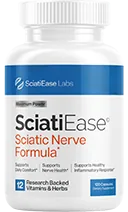
SciatiEase: from $49.99 a bottle120 capsules · 1, 3 or 6 bottles · 180-day money-back guarantee
See packsDrug evidence06
Do pain medicines work for sciatica?
Pain medicines help sciatica less than most people expect. A 2012 BMJ review led from Sydney pooled 23 trial reports and found most common drugs did little better than placebo (Pinto et al., BMJ 2012). It is likely the "Australian review" the SciatiEase sales page mentions.
Side effects came in a median 17% of people on the drugs, against 11% on placebo (Pinto et al., BMJ 2012). A 2018 review of gabapentin, pregabalin and topiramate found no drop in pain or disability in 14 of 15 comparisons (Enke et al., CMAJ 2018).
| Drug type | What the reviews found |
|---|---|
| Anti-inflammatories | No clear benefit over placebo (Pinto et al., BMJ 2012) |
| Steroids | Some short-term benefit in two trials (Pinto et al., BMJ 2012) |
| Gabapentin, pregabalin | Little or no benefit, more side effects (Enke et al., CMAJ 2018) |
Never stop, skip or cut a prescribed drug on your own. Talk to your prescriber before any change.
Red flags07
When is sciatica an emergency?
Sciatica is an emergency when it comes with numbness around the genitals or bottom, new bladder or bowel trouble, leg weakness, or pain in both legs. These can signal cauda equina syndrome (AANS, Cauda Equina Syndrome).
That condition usually needs urgent surgery, and people treated within 48 hours tend to recover better (AANS, Cauda Equina Syndrome).
- Both legsSciatica in both legs at once
- Numb saddle areaNumbness around the genitals or bottom
- Bladder or bowelNew trouble peeing, or loss of control
- Weak legsLegs weak or getting weaker
- After an injurySevere pain after a fall or accident
See a GPIf the pain is not better after a few weeks, is getting worse, or stops you doing normal activities. Most sciatica eases within 4 to 6 weeks.
Call 911For any of the signs above: they can mean cauda equina syndrome, which needs surgery fast. Do not wait to see if a supplement helps.
Signs from the NHS (NHS, Sciatica) (AANS, Cauda Equina Syndrome). A supplement never replaces an exam.
Supplements08
Where do supplements fit with sciatica?
Supplements sit behind movement, heat and a doctor's advice for sciatica. The best-studied nutrient is PEA: a 3-week trial in 636 people used 300 or 600 mg a day and reported better pain and function than placebo (Cruccu et al., CNS Drug Targets 2019).
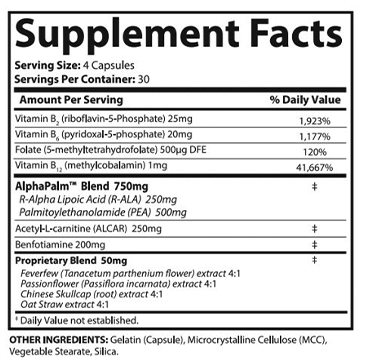
That trial was short, and most other nerve nutrients were studied in diabetic neuropathy. SciatiEase holds PEA 500 mg per 4 capsules, but no trial has tested the product.
- Compare ingredients in the nerve supplements guide.
- Check your medicines in supplements and nerve medicines.
- Tell your doctor about every supplement you take (NCCIH, Using Supplements Wisely).
FAQ09
Sciatica questions people ask
What is sciatica in simple terms?
Sciatica is nerve pain that travels from the low back or buttock down one leg. It happens when a nerve root in the lower spine is squeezed, often by a disc, and can bring tingling or numbness too (MedlinePlus, Sciatica). It is a symptom, not a diagnosis.
What usually causes sciatica?
A bulging or herniated disc in the lower spine. Spinal stenosis and injuries come next, and sometimes no cause is found (MedlinePlus, Sciatica). Disc bulges are common in pain-free people too, so scans need context (Brinjikji et al., AJNR 2015). A doctor matches any finding to your exam.
How long does a flare of sciatica tend to last?
Most flares ease within a few weeks, often by 4 to 6 weeks. Some last months, and pain can return (NHS, Sciatica). See a doctor if it is not improving after a few weeks. Get help sooner if it keeps getting worse.
Is walking good for sciatica?
Yes, for most people gentle walking helps. The NHS advises staying as active as you can, with exercises and heat (NHS, Sciatica). Get checked if walking brings on leg weakness or numbness. Long bed rest tends to slow recovery.
Do nerve pain drugs like pregabalin help sciatica?
Usually not much. A review of nine trials found gabapentinoids gave little relief for sciatica-type pain and more side effects than placebo (Enke et al., CMAJ 2018). If you take one, keep taking it and ask your prescriber. Do not change the dose on your own.
When should you go to the ER for sciatica?
Call 911 or go to the ER for numbness around the genitals or bottom, new bladder or bowel problems, leg weakness, or sciatica in both legs. These can signal cauda equina syndrome (AANS, Cauda Equina Syndrome). It needs fast care, often surgery within 48 hours.
Does an MRI always find the cause of sciatica?
No. Many pain-free people have disc bulges too: 30% at age 20 and 84% at age 80 (Brinjikji et al., AJNR 2015). Doctors often skip a scan in the first weeks unless red flags appear. Most sciatica improves without a scan.
Who wrote this10
Written and reviewed by
Pages built from the Supplement Facts panel, the brand pages and linked NIH, FDA, FTC, NHS and peer-reviewed sources.
Last updated . See our editorial standards and the way we check reviews. This website is run by Isciatiease, a U.S. desk for SciatiEase, not by the manufacturer or by SciatiEase Labs. Purchases made through our order links earn us a commission.
Keep reading
More about SciatiEase
U.S. desk for SciatiEase
Ready to try SciatiEase?
Check your medicines first, then pick a pack. Bigger packs cost less per bottle, and the 180-day money-back guarantee gives you time to judge it.
- Secure checkout on the brand page
- 180-day guarantee
- Ships from the U.S.