Benfotiamine
Benfotiamine in SciatiEase: What 200 mg of This Vitamin B1 Form Does and Does Not Do
Benfotiamine is a fat-soluble, lab-made form of vitamin B1 (thiamin) that the body turns into thiamin. SciatiEase lists 200 mg per 4-capsule serving, or 100 mg at 2 capsules. The main nerve trial used 300 or 600 mg a day for 6 weeks in diabetic neuropathy, and no trial has tested it for sciatica.
Written by the SciatiEase label deskUpdated
The basics01
What is benfotiamine?
Benfotiamine is a man-made form of vitamin B1, also called thiamin. It dissolves in fat, while ordinary thiamin dissolves in water. Once absorbed, the body converts it to thiamin (NIH ODS, Thiamin).
Thiamin helps cells turn food into energy. Nerve cells use a lot of energy, so they depend on a steady supply.
A severe shortage of thiamin causes beriberi. Its main signs are nerve damage in the limbs and muscle wasting (NIH ODS, Thiamin). That link is why researchers have tested thiamin forms in nerve conditions.
Benfotiamine is not found in food. You get thiamin from whole grains, pork, beans and fortified cereals. Benfotiamine appears only in supplements such as SciatiEase.
| Point | Benfotiamine | Thiamin (vitamin B1) |
|---|---|---|
| Where it comes from | Made in a lab | Food and supplements |
| Dissolves in | Fat | Water |
| What the body does with it | Converts it to thiamin | Uses it directly |
| Daily need for adults | No separate target | 1.2 mg for men, 1.1 mg for women |
| Upper limit | None set | None set |
On the label02
How much benfotiamine is in SciatiEase?
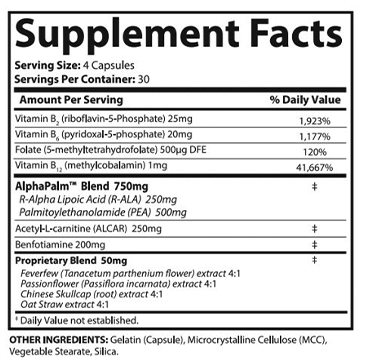
SciatiEase has 200 mg of benfotiamine in each 4-capsule serving. The Supplement Facts panel lists it as its own line, with a printed amount.
Take 2 capsules, the sales page's starting amount, and you get 100 mg. Take the full label serving of 4 and you get 200 mg.
The panel shows no Daily Value percentage for benfotiamine. Thiamin has a daily target, but benfotiamine as a separate compound does not.
For scale, adults need only about 1.1 to 1.2 mg of thiamin a day (NIH ODS, Thiamin). A 200 mg dose of benfotiamine is far above that.
| Name on the label | Benfotiamine |
|---|---|
| What it is | Fat-soluble form of vitamin B1 (thiamin) |
| Group on the label | Nerve nutrients |
| Amount per 4 capsules | 200 mg per 4 capsules |
| Amount per 2 capsules | half of that |
| Amount used in research | 300-600 mg a day in a 6-week diabetic neuropathy trial |
| Strength of evidence | One short trial; one symptom score improved |
| Marketed or traditional use | Vitamin B1 form |
| Main caution | Generally well tolerated in trials. |
2 capsules
100 mg of benfotiamine. That is one third of the lower trial dose of 300 mg.
4 capsules
200 mg of benfotiamine. Still below the 300 mg and 600 mg groups in the main trial (Stracke et al., BENDIP 2008).
More capsules?
Do not go past the label serving of 4 a day without asking your doctor. More is not tested in this formula.
Every line of the formula, with its amount, is on the ingredients overview.
The research03
What does research say about benfotiamine for nerves?
Benfotiamine research for nerves is small and mostly in diabetic neuropathy. That is nerve damage linked to high blood sugar, usually felt in the feet and legs (NIDDK, Peripheral Neuropathy).
The best-known trial is BENDIP. It gave 165 people with diabetic nerve damage 600 mg, 300 mg or a placebo each day for 6 weeks (Stracke et al., BENDIP 2008).
The results were mixed. One symptom score improved in the people who finished the study as planned. When everyone who started was counted, the gain was only borderline. A second symptom score did not change.
The higher dose did better than the lower one, and people tolerated both well (Stracke et al., BENDIP 2008). The NIH notes three small studies of 120 to 900 mg a day with milder symptoms, and says larger, longer studies are needed (NIH ODS, Thiamin).
| Question | What the trial showed |
|---|---|
| Who took part | 165 adults with diabetic polyneuropathy |
| Daily doses | 600 mg, 300 mg or placebo |
| How long | 6 weeks |
| Main symptom score | Better in the per-protocol group; borderline when all starters were counted |
| Second symptom score | No difference from placebo |
| Dose effect | Larger benefit at 600 mg a day |
| Side effects | Well tolerated |
At 200 mg per 4 capsules, SciatiEase sits below both trial groups. A short trial at higher doses cannot tell us what 200 mg does inside a mixed formula.
Sciatica04
Does benfotiamine help sciatica?
No trial has tested benfotiamine for sciatica. The human studies we found looked at diabetic nerve damage, which has a different cause.
Sciatica usually starts when a disc or a narrowed spinal canal presses on a nerve root in the low back (MedlinePlus, Sciatica). A vitamin cannot take that pressure away.
Low thiamin can harm nerves, so getting enough B1 matters for anyone. That does not mean extra benfotiamine helps a nerve that is pinched rather than starved of B1.
Most sciatica eases within 4 to 6 weeks with staying active and simple self-care (NHS, Sciatica). See sciatica basics for what usually helps.
Sciatica in both legs, numbness around the genitals or bottom, new bladder or bowel problems, weak legs, or pain after an injury needs emergency care. Do not wait to see if a supplement helps (NHS, Sciatica) (AANS, Cauda Equina Syndrome).
SciatiEase: from $49.99 a bottle120 capsules · 1, 3 or 6 bottles · 180-day money-back guarantee
See packsSafety05
Is benfotiamine safe to take?
Benfotiamine was well tolerated in its main 6-week trial, even at 600 mg a day (Stracke et al., BENDIP 2008). No upper limit has been set for thiamin, because no harm has been shown from high intake (NIH ODS, Thiamin).
Long-term data are thin: most studies ran for weeks, not years.
The bigger safety questions with SciatiEase come from other lines in the formula, such as vitamin B6, feverfew and lipoic acid. Read them on the side effects page.
- Tell your doctor and pharmacist about every supplement you take (NCCIH, Using Supplements Wisely).
- If you have diabetes, keep your usual checks; nerve symptoms should be followed by your care team (NIDDK, Peripheral Neuropathy).
- Pregnant, nursing or under 18: ask a physician before taking SciatiEase.
- Stop and seek advice if you notice a rash or stomach upset after starting.
Do not stop, skip or change any prescribed medicine because you started benfotiamine or SciatiEase. Talk to your doctor first.
Why this form06
Why use benfotiamine instead of plain vitamin B1?
Makers choose benfotiamine because it dissolves in fat, which is thought to help absorption. The body still ends up with thiamin either way (NIH ODS, Thiamin).
The nerve trials used benfotiamine, so a formula aimed at nerves tends to copy that choice. Matching the form does not mean matching the dose.
Plain thiamin is cheap and is found in most multivitamins. If you already take a B-complex, check its B1 line before adding more.
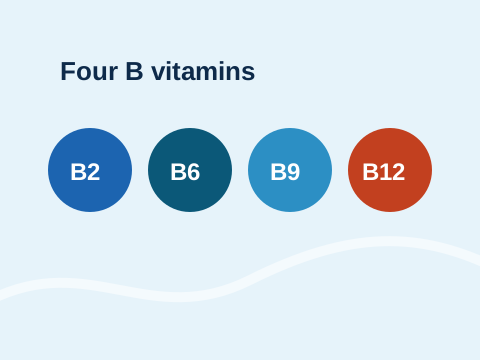
Learn how benfotiamine sits with B2, B6, folate and B12 on the B vitamins page, or compare it with other nerve nutrients in the nerve supplements guide.
Other ingredients07
What else is in SciatiEase besides benfotiamine?
Benfotiamine is one of 12 label lines. The others are PEA, R-alpha lipoic acid, acetyl-L-carnitine, four B vitamins and a 50 mg herb blend.
FAQ08
Benfotiamine questions
Is benfotiamine the same as vitamin B1?
Not quite. Benfotiamine is a lab-made, fat-soluble form of vitamin B1 that the body converts to thiamin (NIH ODS, Thiamin). Plain thiamin dissolves in water and comes from food. Both end up as the same vitamin in your cells, but only benfotiamine is used in most nerve trials.
How much benfotiamine is in one SciatiEase serving?
One 4-capsule serving holds 200 mg of benfotiamine, and 2 capsules hold 100 mg. The Supplement Facts panel prints it as its own line. A bottle of 120 capsules gives 30 full servings, so 30 days at 4 a day or 60 days at 2.
Is 200 mg of benfotiamine a high dose?
Compared with daily needs, yes: adults need about 1.1 to 1.2 mg of thiamin a day (NIH ODS, Thiamin). Compared with nerve trials, no: the main trial used 300 or 600 mg a day (Stracke et al., BENDIP 2008). So 200 mg is large for nutrition and modest for research.
Does benfotiamine help sciatic nerve pain?
No study has tested benfotiamine for sciatica. Its trials looked at diabetic nerve damage, where one symptom score improved over 6 weeks (Stracke et al., BENDIP 2008). Sciatica usually comes from pressure on a nerve root, which a vitamin cannot remove. Talk with your doctor about pain that lasts.
How long does benfotiamine take to work?
The main trial checked symptoms after 6 weeks, at 300 or 600 mg a day (Stracke et al., BENDIP 2008). There is no data on how long 200 mg takes inside SciatiEase. Track how you feel over several weeks, and tell your doctor if symptoms get worse instead of better.
Is it safe to take benfotiamine every day?
Daily benfotiamine was well tolerated for 6 weeks in its main trial (Stracke et al., BENDIP 2008), and thiamin has no upper limit (NIH ODS, Thiamin). Long-term studies are scarce. Tell your doctor you take it, keep any prescribed medicine, and stay within the 4-capsule label serving of SciatiEase.
Can I take benfotiamine with a B-complex vitamin?
Usually yes for the B1 part, since no upper limit exists for thiamin (NIH ODS, Thiamin). The concern is vitamin B6: SciatiEase already has 20 mg per serving, and too much B6 over time can harm nerves (NIH ODS, Vitamin B6). Check your B-complex label and avoid stacking B6.
Who wrote this09
Written and reviewed by
Pages built from the Supplement Facts panel, the brand pages and linked NIH, FDA, FTC, NHS and peer-reviewed sources.
Last updated . See our editorial standards and the way we check reviews. This website is run by Isciatiease, a U.S. desk for SciatiEase, not by the manufacturer or by SciatiEase Labs. Purchases made through our order links earn us a commission.
Keep reading
More about SciatiEase
U.S. desk for SciatiEase
Ready to try SciatiEase?
Check your medicines first, then pick a pack. Bigger packs cost less per bottle, and the 180-day money-back guarantee gives you time to judge it.
- Secure checkout on the brand page
- 180-day guarantee
- Ships from the U.S.